
Cluster Dextrin: Intra-Workout Carbs Explained | Bullpen
Cluster Dextrin Explained: A Practical Guide to Intra-Workout Carbohydrates
Cluster Dextrin Explained: A Practical Guide to Intra-Workout Carbohydrates
Most supplement discussions focus on what to take before or after training. For long, high-volume or repeated sessions, however, what you consume during the workout can matter just as much. Carbohydrate taken during exercise can help maintain fuel availability, preserve training quality and begin supporting glycogen replacement before the session is over.
Cluster Dextrin is designed for that job. Also called highly branched cyclic dextrin, or HBCD, it is a high-molecular-weight glucose polymer used in intra-workout carbohydrate powders. Its defining feature is not that it contains magical calories; 25 grams of Cluster Dextrin still provides the same approximate energy as 25 grams of another digestible carbohydrate. Its advantage is formulation: a large, highly branched molecule can create a relatively low-osmolality drink, which may support rapid stomach emptying and easier tolerance during hard exercise.
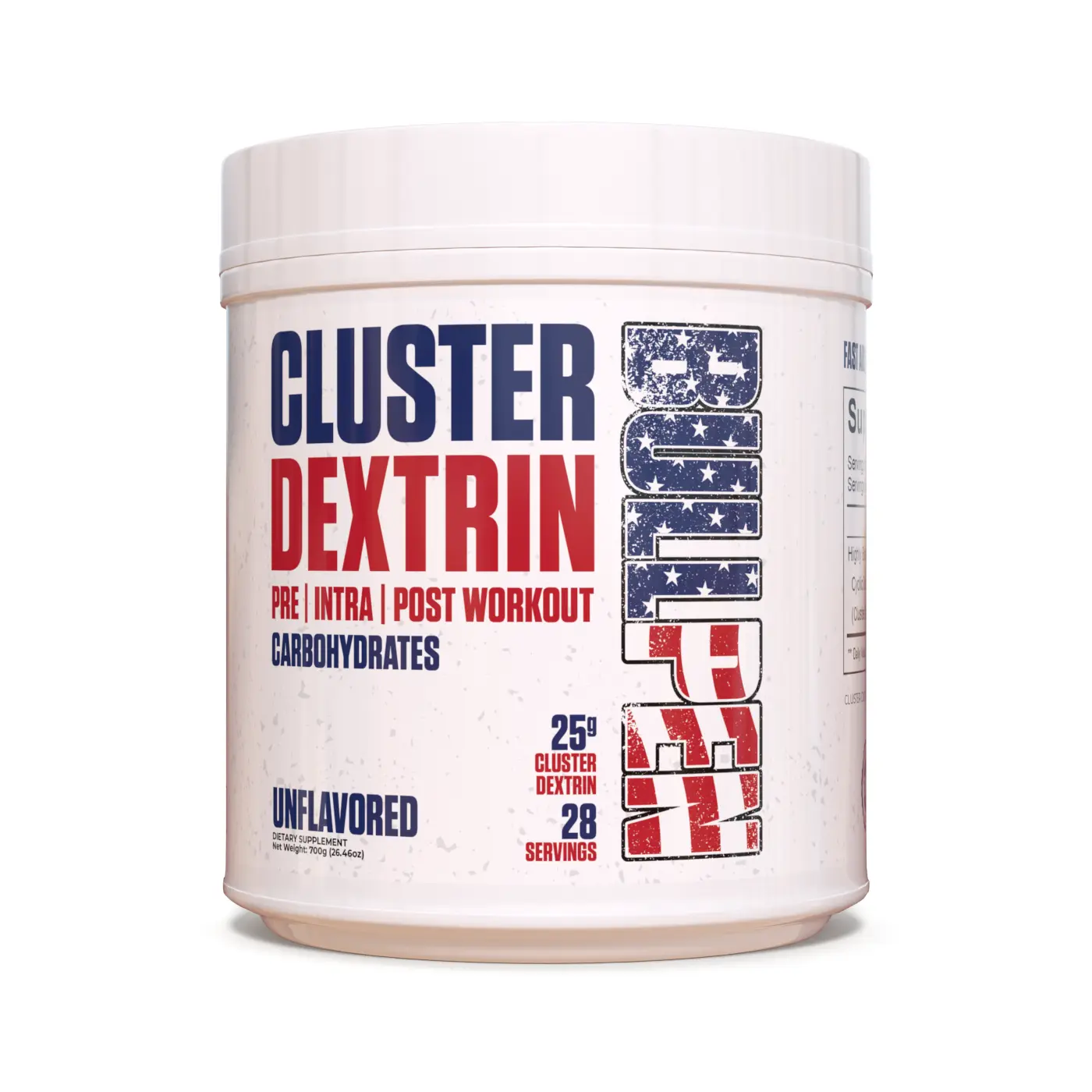
Bullpen Cluster Dextrin provides 25 grams of carbohydrate per serving, with 700 grams and 28 servings per container. Here is what that carbohydrate is, how it works and who is most likely to benefit.
What Is Highly Branched Cyclic Dextrin?
Highly branched cyclic dextrin is produced from starch, typically through enzymatic processing of amylopectin. The result is a large, tightly branched glucose polymer with a relatively narrow molecular-weight distribution.
A solution's osmolality depends on the number of dissolved particles, not only total carbohydrate grams. Because HBCD molecules are large, a drink can deliver meaningful carbohydrate with fewer particles than the same amount of a small-molecule sugar. That is the basis of its low-osmolality positioning.
Why Low Osmolality Matters During Training
A workout drink must leave the stomach before its carbohydrate and fluid can be absorbed in the small intestine. Very concentrated or high-osmolality drinks can sometimes sit heavily, especially during running, conditioning, high-rep leg work or sessions performed in heat.
Small human studies have found that drinks containing highly branched cyclic dextrin can empty from the stomach faster than comparison drinks made with glucose or standard dextrin. A 2005 study of 10 volunteers reported faster gastric emptying with a low-osmolality HBCD sports drink than with a standard dextrin drink (Takii et al., 2005). An earlier study of seven untrained men also reported faster emptying and fewer selected gastrointestinal complaints with HBCD than with glucose during cycling (Takii et al., 2004).
The studies were small, and no carbohydrate can promise “zero GI discomfort.” Concentration, fluid volume, heat, intensity and individual tolerance all matter. “Designed for low osmolality and easier tolerance” is the more accurate claim.
How Cluster Dextrin Fuels Exercise
Once digested, HBCD ultimately supplies glucose. Working muscle can oxidize that carbohydrate for energy, while the liver uses circulating carbohydrate to help maintain blood glucose. During long or demanding sessions, carbohydrate availability can reduce the need to rely exclusively on stored glycogen.
Muscle glycogen is finite, and long sessions, high-volume bodybuilding, repeated conditioning, endurance events and two-a-day training create greater carbohydrate demand. Cluster Dextrin supplies actual fuel while you train; it is not a stimulant or nitric-oxide ingredient.
Does Cluster Dextrin Provide Sustained Energy?
The phrase “sustained energy” can be misunderstood. Cluster Dextrin is not valuable because it is a slow, low-carbohydrate or non-insulin-spiking food. It is a digestible glucose polymer. Its practical benefit is that it can be mixed into a workout drink and consumed gradually, giving the athlete a continuing source of carbohydrate throughout the session.
Sipping 25 grams across a long workout controls the delivery rate, while low osmolality may help the drink move through the stomach efficiently. That is more accurate than calling HBCD inherently “slow release.”
What Does the Performance Research Show?
The HBCD-specific performance literature is encouraging in places but still limited.
A small crossover study involving seven elite swimmers reported longer time to fatigue after a large HBCD dose compared with glucose or water (Shiraki et al., 2015). Another study using 15 grams during endurance exercise found a smaller rise in perceived exertion with HBCD than with maltodextrin. These findings support the possibility that HBCD's beverage and delivery properties can matter during sustained work.
More recent research has been mixed. In a 2024 crossover study, 21 trained men consumed 30 grams of HBCD between two CrossFit-style workouts. Researchers did not find a clear overall improvement in metabolic or performance outcomes, and isolated findings were considered inconclusive (Grijota et al., 2024). A 2025 resistance-training crossover study found that 45 grams of HBCD was well tolerated and improved repetition velocity in men but not women, with no clear effect on perceived fatigue (Morenas-Aguilar et al., 2025).
HBCD does not always outperform cheaper carbohydrates. It offers plausible gastrointestinal and delivery advantages, while direct performance superiority depends on the workout, dose and athlete.
Who Benefits Most From Intra-Workout Carbohydrates?
Cluster Dextrin is most useful when carbohydrate availability could become a limiting factor.
High-Volume Lifters and Bodybuilders
Long sessions with many hard sets, short rest periods and large muscle groups can create substantial glycogen demand. Intra-workout carbohydrate may help preserve output late in the session, especially when the athlete started training several hours after the last meal.
Functional Fitness and Repeated High-Intensity Training
Workouts that combine lifting, intervals, carries, rowing, cycling or repeated circuits can consume carbohydrate quickly. Cluster Dextrin offers fuel without adding more caffeine or stimulants.
Endurance Athletes
Cyclists, runners, swimmers, triathletes and field-sport athletes commonly use carbohydrate during prolonged exercise. Sports-nutrition guidance often recommends approximately 30 to 60 grams of carbohydrate per hour for longer high-intensity sessions, with higher intakes reserved for very long events and usually built around multiple transportable carbohydrates (Burke et al., 2011; Kerksick et al., 2018).
A 25-gram Bullpen serving can be a practical starting amount, but an athlete training for several hours may need a larger, tested fueling plan.
Two-a-Day Athletes and Tournament Competitors
When recovery time between sessions is short, carbohydrate intake becomes more urgent. Consuming carbohydrate during the first session can support total intake and begin the transition toward glycogen replacement.
Athletes Who Struggle With Sweet or Heavy Drinks
Cluster Dextrin is typically less sweet than an equivalent amount of dextrose and can make it easier to build a drink that does not feel syrupy. Individual tolerance still needs to be tested in training, not discovered on competition day.
Fasted or Low-Carbohydrate Training Situations
If an athlete begins a demanding session without a recent carbohydrate-containing meal, an intra-workout carbohydrate can be more useful. That does not mean fasted training is inherently bad; it means the value of workout fuel depends partly on the fuel available before the session begins.
Who Probably Does Not Need Cluster Dextrin?
A well-fed person completing a 45- to 60-minute moderate lifting session may gain little from intra-workout carbohydrate. Water may be enough, particularly when the athlete ate a balanced meal in the preceding hours and is not training again soon.
One 25-gram serving supplies approximately 100 calories, so it is not “free” for someone managing calorie or carbohydrate intake. The useful question is whether the session needs fuel while it is happening.
How to Use Bullpen Cluster Dextrin
For a typical high-volume or longer gym session, mix one 25-gram serving into approximately 20 to 28 fluid ounces of water and begin sipping near the start of training. Continue drinking across the session rather than consuming the entire serving at once.
Adjust the strategy according to:
Session duration: Longer sessions generally require more total carbohydrate.
Intensity and volume: Repeated high-output work raises demand.
Pre-workout meal: A recent carbohydrate-rich meal may reduce the need for intra-workout fuel.
Body size: Larger athletes often tolerate and require more total fuel.
Environment: Heat increases fluid needs and can reduce gastrointestinal tolerance.
Experience: Start with a conservative amount and train the gut gradually.
Bullpen Cluster Dextrin can be taken before, during or after exercise. Its most distinctive use is during training. Post-workout, it can contribute carbohydrate toward glycogen replacement, but it should be paired with an overall recovery meal and adequate protein.
Cluster Dextrin does not replace electrolytes. Bullpen's product supplies carbohydrate, so athletes with high sweat losses should separately account for sodium and fluid. It also does not replace creatine monohydrate, which serves a different cellular-energy role, or Bullpen Sauce Pre-Workout, which supplies caffeine, pump and focus ingredients.
Cluster Dextrin vs. Dextrose and Maltodextrin
Cluster Dextrin vs. Dextrose
Dextrose is glucose. It is inexpensive, very easy to digest for many people and useful as workout fuel, but its small molecular size can create a higher-osmolality drink at a given carbohydrate concentration. It also tastes sweeter.
Cluster Dextrin is a larger glucose polymer that generally produces a lower-osmolality, less-sweet solution.
Cluster Dextrin vs. Maltodextrin
Maltodextrin is also a glucose polymer. HBCD's highly branched structure may improve gastric-emptying characteristics versus some standard dextrins, but it will not outperform maltodextrin for every user.
Cluster Dextrin vs. a Standard Sports Drink
A conventional sports drink may include carbohydrate, sodium, flavoring and sometimes multiple sugar types. Bullpen Cluster Dextrin is a dedicated carbohydrate powder. That gives the athlete more control: use it alone, add an electrolyte product or combine it with a broader training drink according to the session.
Cluster Dextrin FAQs
Is Cluster Dextrin sugar?
It is a digestible carbohydrate made of linked glucose units. It may not be labeled or taste like table sugar, but the body ultimately digests it into usable glucose.
Does Cluster Dextrin spike insulin?
Because it supplies digestible carbohydrate, it can raise blood glucose and insulin. It should not be marketed as a low-carbohydrate or blood-sugar-neutral product.
Is Cluster Dextrin good for muscle gain?
It can support the training and calorie intake required for muscle gain, especially during high-volume sessions. It does not directly build muscle without sufficient training, protein and total energy.
Will it cause stomach discomfort?
HBCD is chosen partly for low osmolality and has been well tolerated in small exercise studies, but no product can guarantee zero discomfort. Start with one serving in adequate water and adjust based on personal tolerance.
Can I combine Cluster Dextrin with pre-workout?
Yes. Pre-workout and intra-workout carbohydrate serve different purposes. Avoid making the drink excessively concentrated, and consider total caffeine, fluid and electrolyte needs.
Should I use Cluster Dextrin on rest days?
Usually there is no special reason to use an intra-workout carbohydrate on a rest day. It can still be used as a general carbohydrate source, but whole-food meals are typically the priority outside training.
The Bottom Line
Cluster Dextrin is not magic carbohydrate. It is smart carbohydrate engineering: a high-molecular-weight glucose polymer that can deliver meaningful workout fuel in a relatively low-osmolality drink.
Its best use case is clear. Long, high-volume, repeated or endurance-based training can benefit from carbohydrate consumed during the session, especially when pre-workout fuel is limited or recovery time is short. HBCD may be easier to drink and tolerate than a very sweet, concentrated simple-sugar solution, although individual response and direct performance evidence are not universal.
Bullpen Cluster Dextrin provides 25 grams of carbohydrate per serving - enough to create a practical starting point for intra-workout fueling without forcing a complicated protocol. Use it where it solves a real problem: when the quality of the session is being limited by available fuel.
References
1. Takii H, Takii Nagao Y, Kometani T, Nishimura T, Nakae T, Kuriki T, Fushiki T. Fluids containing a highly branched cyclic dextrin influence the gastric emptying rate. International Journal of Sports Medicine. 2005;26(4):314-319. https://doi.org/10.1055/s-2004-820999
2. Takii H, Ishihara K, Kometani T, Okada S, Fushiki T. A sports drink based on highly branched cyclic dextrin generates few gastrointestinal disorders in untrained men during bicycle exercise. Food Science and Technology Research. 2004;10(4):428-431. https://doi.org/10.3136/fstr.10.428
3. Shiraki T, Kometani T, Yokota T, Takii H, Okada S. Evaluation of exercise performance with the intake of highly branched cyclic dextrin in athletes. Food Science and Technology Research. 2015;21(3):499-502. https://doi.org/10.3136/fstr.21.499
4. Grijota FJ, Muñoz D, Robles-Gil MC, et al. Acute effects of 30 g of highly branched cyclic dextrin during CrossFit training. Journal of Functional Morphology and Kinesiology. 2024;9(1):27. https://doi.org/10.3390/jfmk9010027
5. Morenas-Aguilar MD, et al. Highly branched cyclic dextrin supplementation and resistance training performance: a randomized crossover trial. Clinical Nutrition ESPEN. 2025;65:305-314. https://doi.org/10.1016/j.clnesp.2024.12.002
6. Burke LM, Hawley JA, Wong SHS, Jeukendrup AE. Carbohydrates for training and competition. Journal of Sports Sciences. 2011;29 Suppl 1:S17-S27. https://doi.org/10.1080/02640414.2011.585473
7. Kerksick CM, Wilborn CD, Roberts MD, et al. ISSN exercise and sports nutrition review update: research and recommendations. Journal of the International Society of Sports Nutrition. 2018;15:38. https://doi.org/10.1186/s12970-018-0242-y
8. Bullpen Supps. Cluster Dextrin product information. Accessed July 19, 2026. https://www.bullpensupps.com/shop/cluster-dextrin
Editorial safety note: This article is educational and is not medical advice. Dietary supplements are not intended to diagnose, treat, cure or prevent disease. Readers with diabetes, impaired glucose regulation or another medical condition, those taking medication, anyone pregnant or nursing and anyone under 18 should consult a qualified health professional before use.